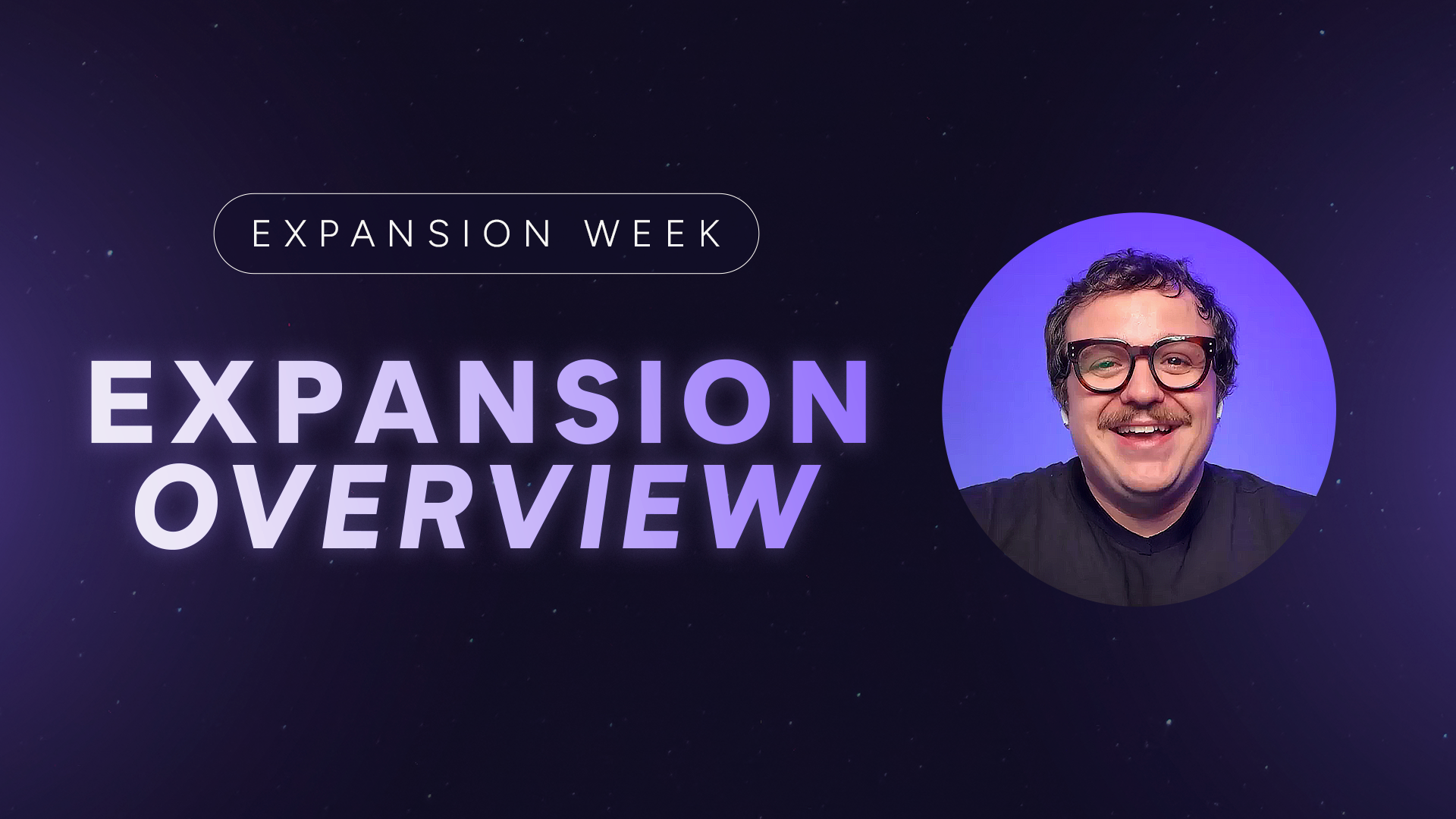
I’m proud to say that today we’re off Galaxy Expansion, our first-ever launch week, with a major announcement: Galaxy Metal, a complete rebuild of the hosting platform.
I sat down with Fred (CEO) and Henrique (CTO) for Day 1 of Galaxy Expansion to understand what drove this transformation and what it means for developers and businesses.
Watch the video:
But if you prefer to read, I’ll sum up everything we’ve talked about below:
Why rebuild everything?
After more than 10 years serving thousands of applications, Galaxy reached a crossroad. “We could keep patching things, or we could build something new that would serve our customers for the next decade. We chose to build,” Fred told me.
Galaxy Metal isn’t just an incremental update. It’s a new codebase, new infrastructure, and a completely reimagined architecture. As Henrique put it: “It’s the platform we wish we had when we started.”
Performance first
When I asked about what’s actually different for users, performance came up immediately. One of the most significant changes is in the infrastructure. Galaxy Metal runs on bare metal servers, eliminating the virtualization layer that consumes resources on traditional cloud platforms.
“Your app gets direct access to the hardware,” Henrique explained. The result is faster builds, quicker deployments, and more consistent performance. Build queues, which were a pain point on the old platform, are basically gone now.
Deployments now happen with zero downtime through a combination of blue-green deployments and Kubernetes orchestration. “Your app stays up while we push the new version,” Fred pointed out. And unlike other platforms, Galaxy doesn’t use spot instances – everything runs on dedicated, stable hardware with no “noisy neighbor” issues.
I pressed them on how the zero-downtime piece actually works, since I’ve talked to customers who were nervous about deploying during business hours. “We’ve always used blue-green deployments – your new version gets fully deployed and tested before we switch traffic over,” Henrique said. “What’s different is that it’s significantly faster now. The whole process – build, deploy, switch – happens in a fraction of the time it used to.”
Cloud-agnostic architecture
I wanted to understand our cloud strategy, especially since Galaxy historically operated exclusively on AWS. With Galaxy Metal, that’s changed. “We’ve unified everything and gone fully cloud-agnostic,” Henrique explained. “We can deploy on pretty much any provider now.”
I asked Fred why this matters for their customers. “First, flexibility – if a customer needs to be on a specific provider for compliance or business reasons, we can make that happen. Second, and this is becoming a bigger deal, data sovereignty.”
This is something I’ve heard a lot about from our European customers – the US Cloud Act, GDPR, data residency concerns. Henrique addressed this head-on: “Our default European infrastructure now runs on OVHcloud, which is a French company headquartered in Roubaix. They’re subject to EU jurisdiction, not US. If you deploy your app in our EU region, your data stays in Europe, on European-owned infrastructure.”
And there’s no extra charge for this flexibility. “No ‘enterprise tier’ required to have that conversation,” Fred emphasized.
Enterprise features without enterprise pricing games
Fred has been vocal about wanting to offer “enterprise features without enterprise pricing games,” so I asked him to elaborate. “Look, we’ve all seen how other platforms do it. You want a feature that should be standard – like SSO or audit logging – and suddenly you need to upgrade to an enterprise plan with a custom quote and a sales call. We don’t want to play that game.”
Galaxy Metal has enterprise-grade security built in: network policies, role-based access control, comprehensive audit logging. It’s part of the platform, not an upsell.
When I asked about certifications – something enterprise customers always ask about – Fred explained that Galaxy Metal is fully GDPR compliant right now, with Data Processing Agreements available for all customers. Looking ahead to 2026, they’re working on SOC 2 Type II and ISO 27001 certifications.
“SOC 2 is about security controls and processes: it’s the standard that auditors in the US typically look for. ISO 27001 is the international standard for information security management,” Henrique clarified. “Having both means we can work with customers who have strict compliance requirements – financial services, healthcare, government contractors.”
Fred added: “This is something we’re investing in because we’ve watched our customers grow. Companies that started with us as small startups are now operating at enterprise scale. We need to support them at every stage.”
What’s coming
Galaxy Metal is live and migrations are happening, but they’ve got more planned. For 2026, Henrique outlined several upcoming features: private networking for secure communication between services, PR previews with automatic preview deployments for pull requests, A/B traffic splitting for canary deployments, and Okta integration for enterprise SSO.
“And we’re completely rebuilding our accounts system, which I know has been a pain point,” Fred said.
“That one’s long overdue,” Henrique admitted. “The new accounts infrastructure will be faster and more reliable. We’re addressing a lot of the friction people have experienced.”
Getting started
I wanted to know where things stand with migrations. Fred explained that customers on the free tier and Essentials plan are already on Galaxy Metal. The Professional tier is wrapping up now, and customers on custom plans will be contacted directly to plan their migration.
For new customers, the process is straightforward: sign up and deploy an app in minutes. The platform supports Node.js, Python, Meteor, plus databases like MongoDB, PostgreSQL, and Redis. The free tier offers a completely isolated sandbox environment with no credit card required.
“Or just book a call with us,” Fred added. “We actually like talking to our customers.”
Galaxy Metal represents over a year of work and establishes the foundation for everything the company plans to build next. As Henrique put it: “I’m proud of what we’ve built. It’s the foundation for everything we’re going to do next.”
What’s next: The Galaxy Expansion Week schedule
This conversation is just the beginning. Galaxy Expansion continues throughout the week with deep dives and major announcements:
Day 2 (Jan 27) – Galaxy Metal: Under the Hood
A technical deep dive into how Galaxy built the new infrastructure on Kubernetes, RKE2, and bare metal servers. Learn how they achieved 3x faster builds and SOC 2 readiness.
Day 3 (Jan 28) – Introducing Galaxy Crew
Meet the collective force of builders and creators powering the next generation of the platform. Exclusive benefits and how to join the Crew.
Day 4 (Jan 29) – The Galaxy Expands: AdonisJS Support
A special session with Harminder Virk (Creator of AdonisJS) on deploying Adonis apps to Galaxy in minutes.
Day 5 (Jan 30) – Meteor 3.4 & The Road Ahead
Celebrating the framework that started it all with the core Meteor team. New features, Fiber-free future, Rspack integration, Change Streams, and what’s next for Meteor.
Try Galaxy today: Deploy your first app at galaxycloud.app.